
As businesses expand incentive and engagement programs internationally, reward delivery becomes significantly more complex.
What may begin as a simple vendor relationship in one country often evolves into a fragmented network of regional suppliers, local fulfillment processes, and disconnected systems across multiple markets.
For enterprise organizations managing customers, employees, sales teams, or channel partners globally, this fragmentation creates operational inefficiencies and inconsistent user experiences.
This is why many businesses are moving away from local reward vendor models and toward centralized global rewards infrastructure.
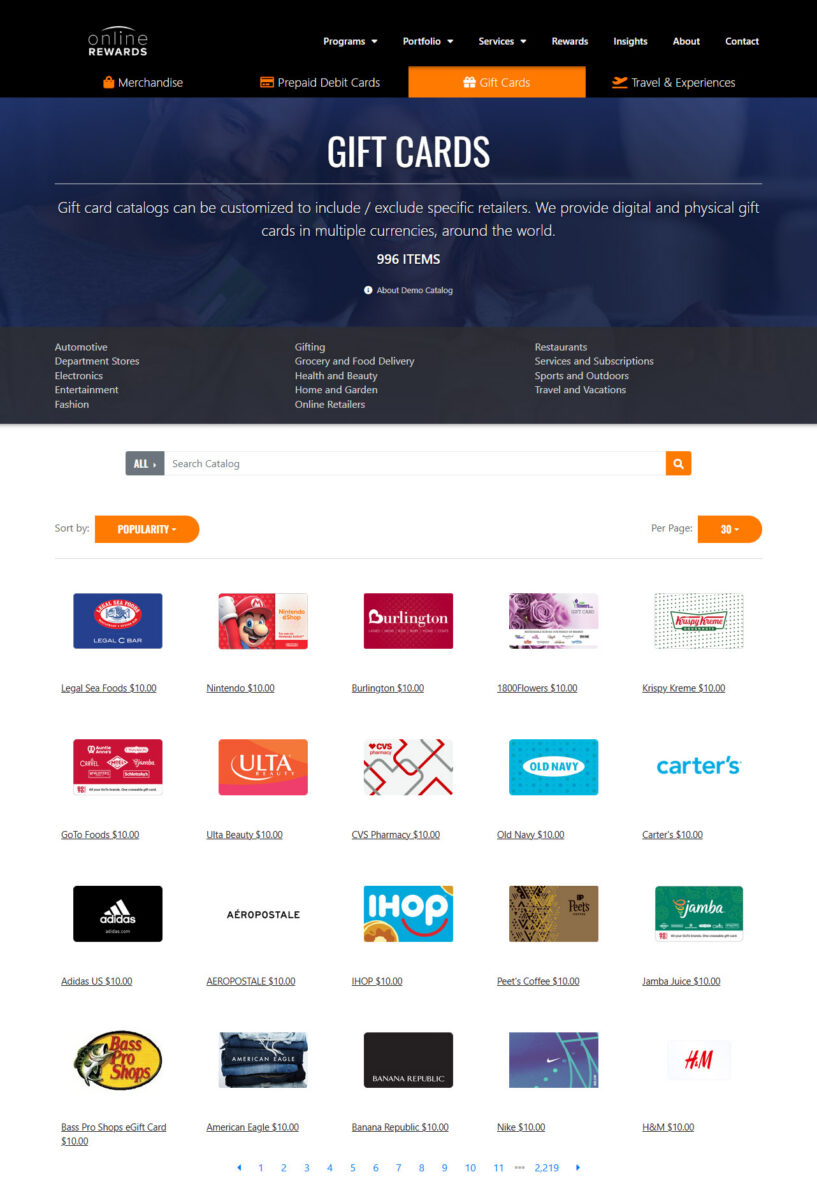
A global rewards catalog allows organizations to manage incentives, fulfillment, and engagement across multiple countries from a single platform while maintaining localized reward relevance for users in different regions.
Understanding the difference between these approaches is critical for businesses evaluating how to scale engagement programs internationally.
A global rewards catalog is a centralized platform that provides access to rewards and incentives across multiple countries, currencies, and regions.
Rather than relying on separate local vendors in different markets, businesses manage rewards through one unified system.
This creates a more scalable and consistent approach to international engagement programs.
Platforms such as Online Rewards provide centralized global rewards infrastructure designed to support enterprise engagement programs across multiple audiences and regions.
Local reward vendors are regional suppliers that provide incentives within a specific country or market.
This model is common in organizations that have expanded internationally over time without centralized infrastructure.
One vendor may handle rewards in the United States
Another may support Europe
Separate providers may manage APAC or LATAM fulfillment
While local vendors can provide strong regional expertise, managing multiple suppliers introduces operational complexity as programs scale.
The biggest difference between a global rewards catalog and local reward vendors is centralization.
Local vendor models are fragmented by region.
Global rewards catalogs centralize infrastructure across all markets.
With local vendors:
With a centralized global rewards catalog:
This distinction becomes increasingly important as organizations expand incentive strategies internationally.

Many organizations underestimate the operational complexity created by managing multiple local vendors.
Initially, regional suppliers may appear flexible and cost-effective. However, as programs grow, fragmentation creates significant overhead.
This creates inefficiencies that compound over time.
For global organizations managing multiple audiences such as employees, customers, and partners, this fragmentation becomes increasingly difficult to scale.
One of the biggest advantages of centralized rewards infrastructure is consistency.
Enterprise organizations increasingly want engagement programs to feel connected across regions and audiences.
With local vendors, experiences often vary significantly between countries.
These inconsistencies weaken engagement and create operational friction.
A centralized global rewards catalog helps standardize the experience while still allowing for regional localization where needed.
Scalability is one of the biggest reasons enterprises move toward centralized rewards infrastructure.
Adding new countries with local vendors often requires:
This slows down expansion and increases operational overhead.
Organizations can expand programs globally without rebuilding the infrastructure market by market.

One common misconception is that centralized infrastructure reduces local relevance.
In reality, modern global rewards catalogs are designed to combine centralization with localization.
The difference is that all of this is managed through one centralized platform rather than separate local systems.
This allows enterprises to maintain reward relevance while simplifying operations globally.
Fragmented local vendor models often create major reporting challenges.
Centralized rewards infrastructure solves this problem through unified reporting and analytics.
This centralized visibility enables better strategic decision-making and ongoing optimization.
Modern engagement strategies increasingly rely on automation and real-time incentives.
Global rewards catalogs are typically designed with stronger integration and automation capabilities than fragmented local vendor setups.
Local vendor models often require significantly more manual coordination and operational management.

The right model depends on the scale and complexity of the organization’s engagement strategy.
typically benefit from centralized rewards infrastructure.
As engagement programs become more strategic and enterprise-wide, centralized infrastructure becomes increasingly valuable.
A global rewards catalog is a centralized platform that provides rewards and incentive fulfillment across multiple countries and regions through one system.
Local reward vendors are regional suppliers that provide incentives within specific countries or markets.
Enterprises often move toward centralized platforms to improve scalability, reduce operational complexity, and gain better reporting visibility.
Yes. Modern platforms support country-specific rewards, local currencies, and regionally relevant incentives while maintaining centralized management.
Global rewards infrastructure is commonly used for loyalty programs, employee engagement, sales incentives, channel partner programs, and referral systems.
As enterprise engagement programs become more global and multi-audience, fragmented local reward vendor models become increasingly difficult to manage.
While local suppliers may offer regional flexibility, they often create operational complexity, inconsistent user experiences, and limited reporting visibility at scale.
Global rewards catalogs provide a more centralized approach to international engagement infrastructure.
Organizations can simplify operations while delivering more consistent and effective engagement experiences worldwide.
Platforms such as Online Rewards help enterprises manage global rewards programs through centralized infrastructure designed for customers, employees, sales teams, and partners alike.
For organizations scaling engagement internationally, centralized rewards infrastructure is increasingly becoming a strategic advantage rather than just an operational improvement.