
Delivering rewards across multiple countries sounds straightforward in theory, but in practice it introduces significant complexity. Differences in currency, local preferences, supplier availability, and logistics can quickly turn a simple incentive program into a difficult operational challenge.
As businesses expand globally, the ability to deliver consistent and relevant rewards becomes critical. A one-size-fits-all approach rarely works, and managing separate vendors or reward options in each region creates inefficiencies and inconsistency.
A global rewards catalog solves this by providing a centralized system for sourcing and delivering incentives across different markets. Instead of managing rewards country by country, businesses can offer a wide range of options from a single platform, ensuring that incentives remain relevant, accessible, and easy to manage at scale.
Understanding how a global rewards catalog works and what makes it effective is key to running successful international incentive programs.
A global rewards catalog is a curated collection of incentives that can be delivered to users across multiple countries, currencies, and regions through a single system. It forms the foundation of any global incentive program by providing a consistent way to offer rewards that are relevant and accessible to a diverse audience.
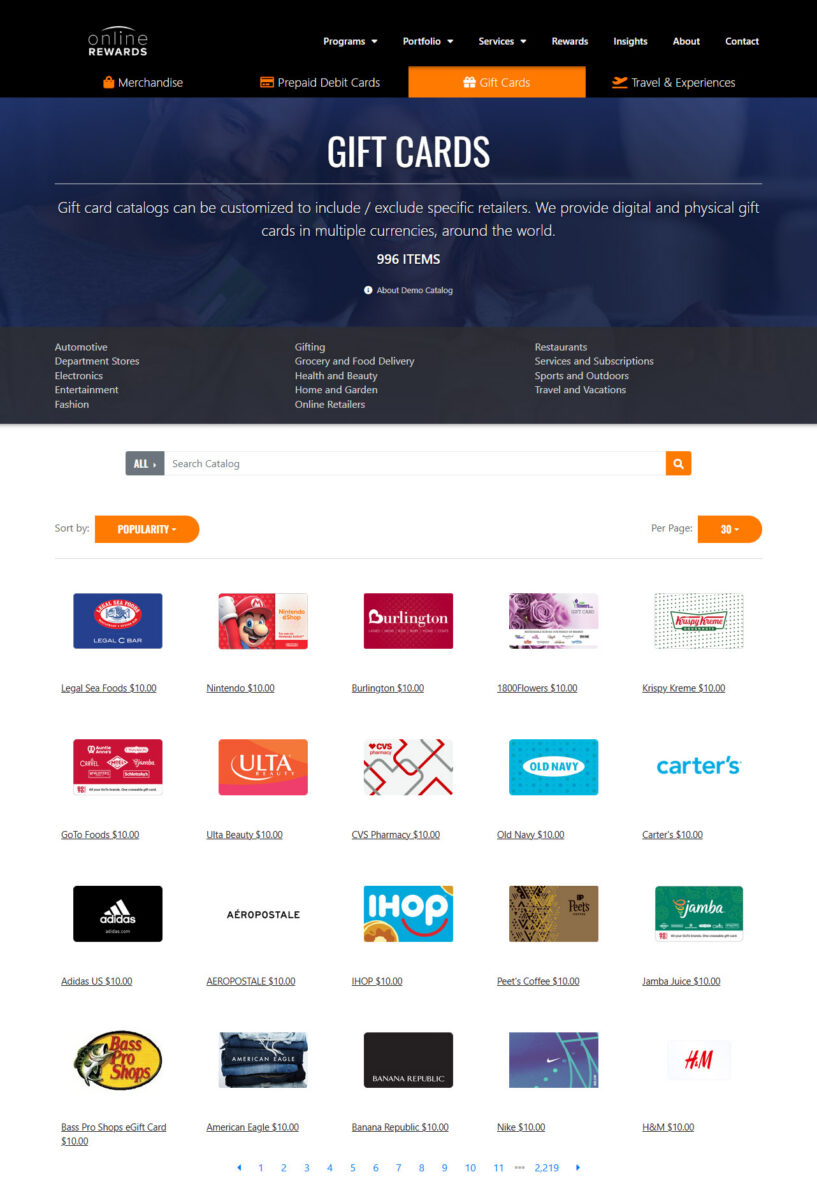
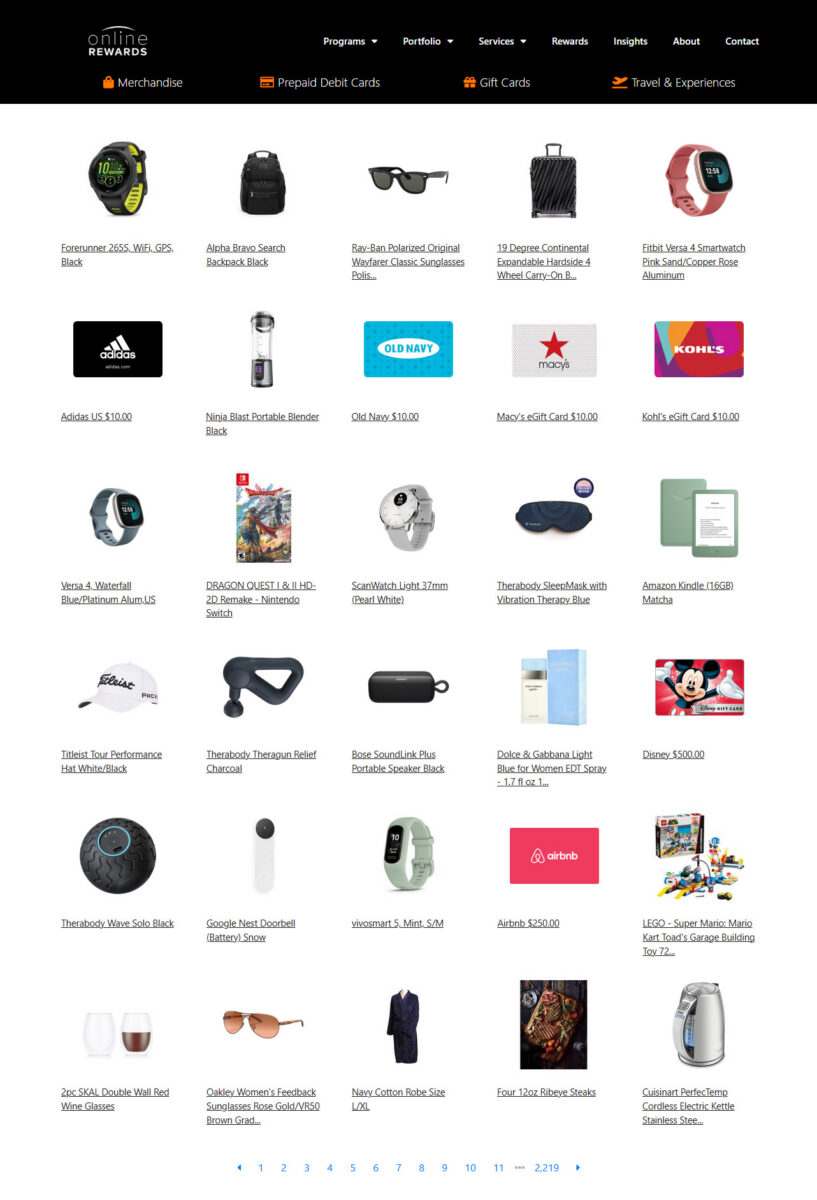
At its core, a global rewards catalog brings together a wide range of reward types from different suppliers into one unified platform. This can include digital gift cards, prepaid cards, merchandise, travel experiences, and region-specific incentives. Rather than sourcing these rewards individually in each market, businesses can access them centrally.
The key difference between a standard rewards catalog and a global one is coverage and localization. A global catalog is designed to support multiple regions, ensuring that rewards are available and appropriate for users in different countries. This includes taking into account local brands, cultural preferences, and delivery methods.
A global rewards catalog also simplifies management. Instead of working with multiple vendors and managing separate inventories, businesses can select rewards from a single interface. This reduces operational complexity and makes it easier to maintain consistency across programs.
In many cases, users are given the ability to choose their own rewards from the catalog. This increases engagement by allowing individuals to select incentives that are meaningful to them, rather than receiving a fixed reward that may not be relevant.
Platforms such as Online Rewards provide access to global rewards catalogs that are continuously maintained and updated. This ensures that businesses can offer high-quality, relevant incentives without needing to manage supplier relationships directly.
In simple terms, a global rewards catalog is the system that enables businesses to deliver the right rewards to the right people, regardless of where they are located.
Delivering rewards across a single country is relatively straightforward. Expanding that same program across multiple countries introduces a range of challenges that can quickly increase complexity and cost.
One of the biggest challenges is variation in local preferences. Rewards that are appealing in one market may have little relevance in another. For example, popular retail brands, digital services, or experiences can differ significantly between countries. Without localized options, engagement levels can drop.
Currency differences also create complications. Rewards need to be priced and delivered in a way that aligns with local currencies, which requires consistent conversion, pricing control, and financial management. Handling this manually or across multiple vendors can lead to inconsistencies and inefficiencies.
Supplier management is another major factor. Without a global solution, businesses often need to work with different reward providers in each region. This means managing multiple contracts, negotiating pricing, and ensuring availability across all markets. Over time, this creates operational overhead and reduces scalability.
Logistics and fulfillment add another layer of complexity, particularly for physical rewards. Shipping costs, delivery times, customs processes, and inventory management all need to be considered. Delays or failures in delivery can negatively impact the user experience and reduce the effectiveness of the program.
Compliance and regulatory requirements can also vary between regions. Different countries may have specific rules around incentives, financial transactions, or data handling, which must be accounted for when delivering rewards.
Consistency is another challenge. When rewards are sourced and delivered through different systems or vendors, the overall experience can vary between regions. This can lead to confusion for users and make it harder to maintain a unified program structure.
These challenges make it difficult for businesses to scale incentive programs globally using manual processes or fragmented systems. Without the right infrastructure, global reward delivery becomes time-consuming, inefficient, and difficult to manage effectively.

A global rewards catalog is designed to remove the complexity associated with delivering incentives across multiple regions by centralizing everything into a single system. Instead of managing separate suppliers, currencies, and fulfillment processes, businesses can rely on one platform to handle the entire lifecycle of reward delivery.
One of the main ways it solves these challenges is through centralized access to rewards. Businesses can browse and select incentives from a single catalog that already includes options tailored to different regions. This removes the need to source rewards individually in each country and ensures that users have access to relevant choices wherever they are located.
Localization is built into the catalog. Rewards are aligned with regional preferences, meaning users in different countries see options that are familiar and meaningful to them. This significantly improves engagement compared to offering a limited or generic set of incentives.
Currency management is also handled within the platform. Rewards are priced appropriately for each region, and businesses do not need to manage conversions or pricing inconsistencies manually. This creates a smoother experience for both administrators and users.
Supplier management is another area where a global catalog adds value. Instead of maintaining relationships with multiple vendors, the platform manages these connections on behalf of the business. This reduces administrative overhead and ensures that rewards remain available and up to date.
Fulfillment is streamlined through the platform’s infrastructure. Digital rewards can be delivered instantly, while physical rewards are managed through established logistics networks. This ensures reliable delivery without requiring businesses to handle the operational details themselves.
Consistency is a key benefit of using a global catalog. Program rules, reward selection, and user experience can remain aligned across regions, even when the specific rewards vary locally. This helps maintain clarity and fairness for participants.
Platforms such as Online Rewards are built around this model, providing businesses with a centralized way to manage global rewards without the complexity of fragmented systems.
By consolidating sourcing, localization, currency handling, and fulfillment into one system, a global rewards catalog makes it possible to scale incentive programs internationally in a controlled and efficient way.
Not all global rewards catalogs deliver the same level of quality or effectiveness. The strength of a catalog has a direct impact on engagement, operational efficiency, and the overall success of an incentive program.
One of the most important factors is breadth of coverage. A strong global rewards catalog should offer incentives across a wide range of countries and regions. This ensures that businesses can support international programs without needing to supplement the catalog with additional suppliers.
Relevance is equally important. It is not enough to have a large number of rewards if they are not meaningful to the audience. A high-quality catalog includes region-specific options that reflect local brands, services, and preferences. This helps ensure that rewards feel valuable and appropriate to users in different markets.
Consistency in availability is another key consideration. Rewards should be reliably accessible across regions, without frequent stock issues or gaps in supply. This requires strong supplier relationships and active catalog management to ensure that options remain up to date.
Flexibility is also essential. Businesses need the ability to tailor reward offerings based on different programs, audiences, or budgets. A strong catalog allows for easy filtering, selection, and configuration, making it simple to align rewards with specific goals.
User choice plays a significant role in engagement. Allowing participants to select their own rewards from a catalog increases satisfaction and perceived value. A well-structured catalog makes this process simple and intuitive, encouraging higher participation and redemption rates.
Integration and accessibility are also important. The catalog should be easy to access through the platform or via API, allowing rewards to be embedded into different systems and workflows. This ensures that incentives can be delivered seamlessly as part of a broader engagement strategy.
Platforms such as Online Rewards focus on maintaining strong global catalogs by combining wide coverage, local relevance, and reliable fulfillment within a single system.
Ultimately, a strong global rewards catalog is not defined by the number of rewards it offers, but by how well those rewards meet the needs of users and support the goals of the business.
A global rewards catalog typically includes a wide range of incentive types to meet the needs of different audiences across multiple regions. The variety of rewards available plays a key role in driving engagement, as different users are motivated by different types of incentives.
Digital rewards are among the most commonly used options. These include gift cards for well-known brands, digital vouchers, and prepaid cards. They are popular because they can be delivered instantly, are easy to redeem, and scale effectively across different markets. Digital rewards are particularly well suited to global programs due to their flexibility and speed of delivery.
Prepaid cards provide another flexible option. They allow recipients to choose how they spend their reward, which increases perceived value and ensures relevance regardless of location. This makes them especially useful in programs where user preferences vary widely.
Merchandise rewards offer a more tangible form of incentive. These can include electronics, lifestyle products, or branded goods. Physical rewards are often used for higher-value incentives or milestone achievements where a tangible item creates a stronger impact.
Experiential rewards are also an important category. These include travel, events, and unique experiences that go beyond standard incentives. They are often used to create memorable moments and can be particularly effective in high-engagement or high-value programs.
Localized rewards are a defining feature of a strong global catalog. These are incentives that are specific to a particular country or region, such as local retail brands, services, or experiences. Offering localized rewards ensures that users have access to options that feel relevant and familiar.
Some catalogs also include custom or branded rewards. These can be tailored to specific campaigns or audiences and may include curated selections or company-specific incentives. This adds another layer of flexibility for businesses looking to align rewards with their brand or objectives.
Platforms such as Online Rewards bring these different reward types together into a single global catalog, making it easier for businesses to offer a diverse and relevant selection without managing multiple suppliers.
By providing a broad and well-structured range of rewards, a global catalog ensures that incentive programs can appeal to a wide audience while maintaining consistency across regions.

Global rewards fulfillment is the process of sourcing, managing, and delivering incentives to users across different regions. While the rewards catalog defines what can be offered, fulfillment is what ensures those rewards are actually delivered accurately, reliably, and on time.
The process typically begins when a user earns or selects a reward within a program. This triggers the fulfillment workflow within the platform, which handles everything from order processing to delivery without requiring manual intervention.
For digital rewards, fulfillment is usually immediate. Once a reward is selected, it can be delivered instantly via email, in-platform notification, or a secure link. This speed is one of the key advantages of digital incentives, as it reinforces the connection between action and reward.
Physical rewards require a more complex fulfillment process. The platform coordinates with suppliers, manages inventory where necessary, and handles shipping logistics. This includes selecting the appropriate supplier based on the user’s location, arranging delivery, and ensuring that the reward arrives within an expected timeframe.
Supplier networks are a critical part of global fulfillment. A strong platform maintains relationships with a wide range of suppliers across different regions, allowing it to deliver rewards locally rather than shipping everything internationally. This helps reduce costs, improve delivery speed, and ensure that rewards are relevant to the user’s market.
Tracking and support are also important components of the fulfillment process. Users need visibility into the status of their rewards, particularly for physical items. The platform typically provides tracking information and support channels to handle any issues that arise during delivery.
Compliance and reliability are key considerations in global fulfillment. The platform must ensure that rewards are delivered in line with local regulations and that transactions are handled securely. This is especially important when operating across multiple countries with different requirements.
Platforms such as Online Rewards are built to manage this entire process, combining supplier networks, logistics, and automation into a single system.
By handling fulfillment centrally, a global rewards platform removes the operational burden from businesses and ensures that rewards are delivered consistently, regardless of location.
A global rewards catalog does more than simplify operations. It has a direct impact on how effective an incentive program is, particularly when it comes to engagement, participation, and overall results.
One of the biggest improvements comes from relevance. When users are offered rewards that are familiar and meaningful within their own region, they are far more likely to engage with the program. A global catalog ensures that incentives are tailored to local preferences, which increases both participation and satisfaction.
Choice is another important factor. Allowing users to select their own rewards from a broad catalog creates a sense of control and personal value. This leads to higher redemption rates and stronger engagement compared to fixed or limited reward options.
Speed of delivery also plays a role in performance. With a global catalog connected to an automated fulfillment system, rewards can often be delivered quickly, especially in the case of digital incentives. This reinforces the link between behavior and reward, which is key to driving consistent action.
Consistency across regions is another benefit. A global catalog allows businesses to run programs with a unified structure while still adapting reward options locally. This ensures that participants have a similar experience regardless of location, which improves clarity and trust in the program.
Operational efficiency contributes indirectly to performance as well. By reducing the need for manual processes and multiple vendors, businesses can focus more on optimizing program design rather than managing logistics. This leads to better outcomes over time.
Data and insights also improve when using a centralized catalog. Businesses can track which rewards are most popular, how users engage with different options, and how performance varies across regions. These insights can then be used to refine programs and improve results.
Platforms such as Online Rewards enable businesses to take advantage of these benefits by combining global reward access with automated delivery and reporting.
Overall, a global rewards catalog enhances both the user experience and the operational side of incentive programs, leading to stronger engagement and better performance.
While global rewards catalogs provide a strong foundation for international incentive programs, many businesses fail to get the full value from them due to common mistakes in strategy and execution.
One of the most frequent issues is offering rewards that are not locally relevant. Businesses sometimes assume that the same incentives will work across all regions, but preferences can vary significantly. Without localized options, engagement can drop because users do not see rewards that appeal to them.
Another mistake is limiting choice. Providing only a small number of reward options reduces flexibility and can make programs less appealing. Users are more likely to engage when they can choose rewards that match their personal preferences.
Some organizations also underestimate the importance of fulfillment. Even with a strong catalog, poor delivery experiences can undermine the program. Delays, lack of tracking, or unreliable suppliers can lead to frustration and reduce trust in the program.
A lack of integration is another common problem. When rewards are managed separately from core systems such as CRM, HR, or product platforms, programs often rely on manual processes. This creates inefficiencies and increases the risk of errors.
Inconsistent program design across regions can also create challenges. Without a centralized approach, different teams may structure programs in different ways, leading to confusion and uneven experiences for users.
Another issue is failing to track and optimize performance. Some businesses launch global programs but do not use the available data to refine them. Without analyzing engagement, redemption, and outcomes, it is difficult to improve results over time.
Platforms such as Online Rewards are designed to help avoid these mistakes by providing localization, choice, reliable fulfillment, and integration within a single system.
By understanding and addressing these common pitfalls, businesses can run more effective global incentive programs and maximize the impact of their rewards strategy.

Choosing the right global rewards platform is essential for delivering effective incentive programs at scale. Not all platforms offer the same level of coverage, flexibility, or operational support, so it is important to evaluate options carefully based on your business needs.
The first factor to consider is global coverage. A strong platform should support a wide range of countries and regions, with rewards that are available and relevant in each market. This ensures that your programs can scale internationally without requiring additional vendors.
Localization is closely linked to coverage. The platform should offer region-specific rewards that reflect local brands, preferences, and redemption options. This is critical for maintaining engagement across diverse audiences.
Fulfillment capability is another key consideration. The platform should be able to handle both digital and physical reward delivery reliably, with established supplier networks and logistics processes. This ensures that rewards are delivered consistently and on time.
Flexibility is also important. Businesses often need to run different types of programs with varying rules, audiences, and objectives. A platform should allow for easy configuration and adaptation without requiring significant manual effort.
Integration should be evaluated as well. The platform needs to connect with existing systems such as CRM, HR, and marketing tools. This allows rewards to be triggered automatically based on real-time data and reduces operational overhead.
The range and quality of rewards available in the catalog is another important factor. A strong platform should offer a diverse selection of incentives, including digital, physical, and experiential rewards, all accessible through a single system.
Reporting and analytics capabilities are essential for measuring performance. The platform should provide clear insights into participation, engagement, and outcomes, allowing you to optimize programs over time.
Finally, consider scalability and long-term fit. The platform should be able to support growth in terms of users, regions, and program complexity without requiring significant changes or additional systems.
A platform such as Online Rewards is designed to meet these requirements, offering global reach, reliable fulfillment, and integration within a single solution.
By evaluating these factors, businesses can select a global rewards platform that supports both current needs and future growth.
A global rewards catalog is a collection of incentives that can be delivered across multiple countries and regions through a single platform, allowing businesses to offer locally relevant rewards at scale.
They connect businesses to a network of suppliers and reward options, enabling users to select incentives while the platform manages sourcing, delivery, and fulfillment.
Common options include digital gift cards, prepaid cards, merchandise, travel experiences, and region-specific rewards tailored to local markets.
Rewards are delivered through a combination of digital distribution for instant delivery and supplier networks that handle physical fulfillment in different regions.
Global rewards ensure that incentive programs remain relevant and engaging across different markets, which improves participation and overall program performance.
As businesses expand across regions, delivering incentives in a consistent and effective way becomes increasingly complex. A global rewards catalog provides the structure and infrastructure needed to manage this complexity while maintaining relevance for different audiences.
By centralizing reward sourcing, localization, and fulfillment, businesses can move away from fragmented systems and manual processes. This makes it easier to scale incentive programs internationally without sacrificing quality or user experience.
The impact of a strong global rewards catalog goes beyond operations. It improves engagement by offering relevant choices, increases participation through better user experiences, and enables businesses to optimize programs based on real data.
Platforms such as Online Rewards demonstrate how a unified approach to global rewards can simplify delivery, reduce overhead, and support more effective incentive strategies.
For organizations looking to run successful international programs, a global rewards catalog is not just a feature. It is a critical component of building scalable, high-performing incentive systems.