
Most incentive programs fail for a simple reason. They are designed around rewards instead of behavior.
Businesses often focus heavily on what they are giving away rather than what they are trying to influence. The result is programs that generate temporary activity but fail to create meaningful or lasting engagement.
An effective incentive program is not just a rewards system. It is a structured behavior design framework. The goal is not simply to hand out incentives. The goal is to encourage specific actions, reinforce habits, and drive measurable outcomes.
Whether the audience is employees, customers, or channel partners, the most successful programs are built around a clear understanding of motivation, timing, simplicity, and user experience.
Modern incentive platforms allow businesses to move beyond manual reward programs and build scalable systems that influence behavior consistently across teams, regions, and audiences.
Incentive program design is the process of structuring rewards, rules, and engagement mechanics to influence specific behaviors and outcomes.
This is an important distinction because rewards alone do not drive long-term engagement. The structure of the program determines whether incentives actually influence behavior in a meaningful way.
A poorly designed program may generate short-term participation but fail to create sustained results. A well-designed program creates clear motivation, reinforces desired actions, and aligns incentives with business goals.
While the use cases differ, the underlying principle remains the same. Effective programs connect specific behaviors to meaningful incentives in a way that feels clear, timely, and motivating to the user.
The most important step in designing an incentive program is defining the exact behavior you want to influence.
But effective incentive design starts somewhere else entirely. It starts with behavior.
Before selecting rewards or building campaigns, businesses need to identify the specific action they want users to take.
The more specific the behavior, the more effective the program tends to be.
For example, “improve employee engagement” is too broad. But “increase peer-to-peer recognition activity by 30%” is measurable and actionable.
Clear behavioral goals create clarity for both the business and the participant.
Once the desired behavior is defined, every part of the program can be aligned around reinforcing that action.

Many incentive programs are launched with good intentions but fail to generate meaningful or lasting results.
In most cases, the issue is not the reward itself. The issue is the structure of the program.
One of the biggest problems is complexity. If users do not clearly understand how the program works, what actions matter, or how rewards are earned, engagement drops quickly.
Programs also fail when rewards are disconnected from behavior. Offering incentives without aligning them to meaningful actions often creates short-term participation without long-term impact.
Timing is another common issue. Delayed rewards weaken the psychological connection between the action and the incentive. Immediate or near-immediate reinforcement tends to produce stronger behavioral outcomes.
Lack of visibility also reduces effectiveness. If participants cannot easily track progress, understand goals, or see recognition happening, motivation decreases over time.
Some programs fail because rewards are not relevant to the audience. What motivates one group may not motivate another. Global organizations often encounter this issue when offering the same incentives across different regions and cultures.
Measurement is another major weakness in many programs. Without clear reporting and performance tracking, businesses struggle to understand whether incentives are actually influencing behavior or generating return on investment.
Finally, many organizations rely on manual processes and disconnected systems that make programs difficult to scale and maintain consistently.
Modern platforms such as Online Rewards help address these challenges by centralizing program management, reward delivery, reporting, and automation into a single system.
Effective incentive programs are rooted in behavioral psychology.
The goal is not simply to distribute rewards. It is to create motivation loops that encourage people to repeat specific actions over time.
One of the most important principles is reinforcement timing. Immediate reinforcement creates a stronger connection between action and reward. The closer the reward is delivered to the behavior, the more effective the incentive tends to be.
Progress visibility also plays a major role in motivation. People are more likely to stay engaged when they can clearly see advancement toward goals, milestones, or rewards.
Recognition can be just as powerful as financial incentives in many situations. Public acknowledgment, peer recognition, and status-based rewards often drive strong emotional engagement, particularly in employee and partner programs.
Another important concept is intrinsic versus extrinsic motivation.
Extrinsic motivation comes from external rewards such as money, points, or prizes.
Intrinsic motivation comes from internal satisfaction, achievement, recognition, or personal growth.
The most effective programs balance both. Over-reliance on financial rewards alone can sometimes reduce long-term engagement if participants begin focusing only on the reward rather than the underlying behavior.
Simplicity also matters psychologically. Programs with complicated rules, unclear qualification criteria, or difficult redemption processes create friction that reduces participation.
This clarity increases trust, participation, and long-term engagement.
Different behaviors require different program structures. There is no universal incentive model that works for every audience or objective.
Points-based systems are commonly used for ongoing engagement programs. Participants accumulate points over time and redeem them for rewards. This structure works well for loyalty programs, employee recognition, and recurring engagement activities.
Tiered incentive structures encourage progression by offering increasingly valuable rewards as participants reach higher levels. These programs are effective for long-term engagement and retention.
Milestone-based incentives reward users for completing specific actions or achievements. Examples include certification completion, sales targets, or anniversary recognition.
Leaderboards and competitive structures are commonly used in sales and channel environments where visibility and competition drive motivation.
Short-term campaigns and SPIFF-style programs are useful when businesses want to create urgency around a specific initiative, product launch, or time-sensitive objective.
Recognition-based programs focus more heavily on visibility and acknowledgment rather than transactional rewards. These structures are particularly effective in employee engagement strategies.
The most effective organizations often combine multiple structures depending on the audience and business objective.

Rewards are most effective when they feel personally valuable to the recipient.
One of the biggest mistakes businesses make is assuming the same reward will motivate every audience equally. In reality, preferences vary significantly based on role, geography, culture, and personal motivation.
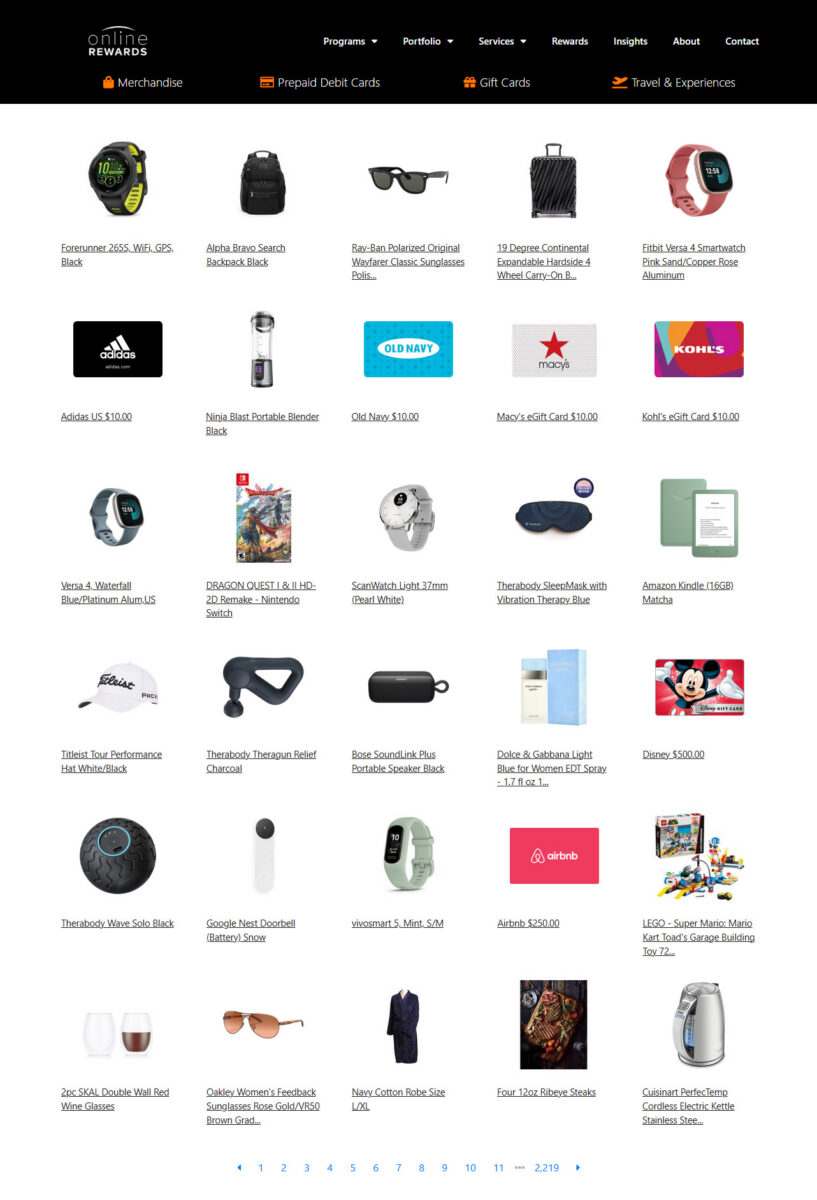
Providing users with choice increases perceived value and engagement. Rather than forcing a single reward option, modern incentive programs allow participants to select incentives that are most meaningful to them.
This is particularly important in global programs where regional preferences vary widely.
A flexible global rewards catalog helps address this challenge by offering localized options across multiple markets.
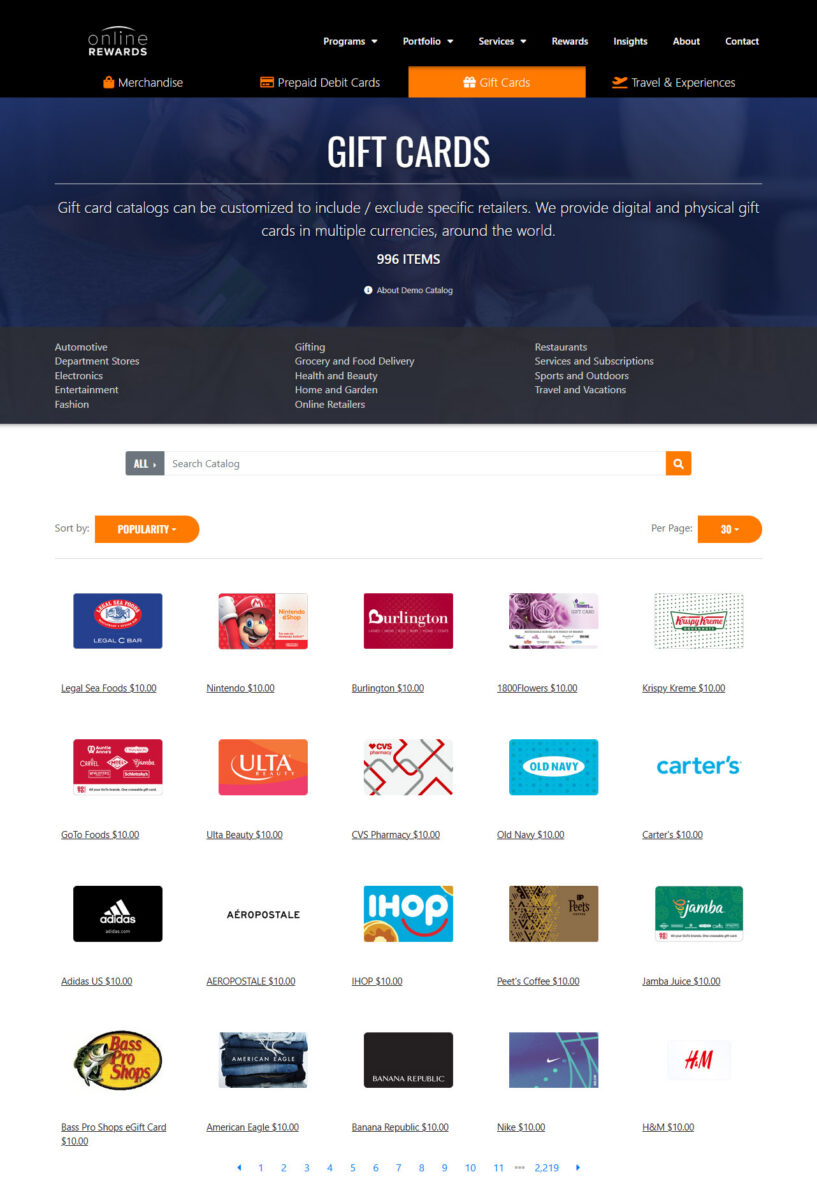
Platforms such as Online Rewards provide access to global reward catalogs that support multiple countries, currencies, and fulfillment models from a single system.
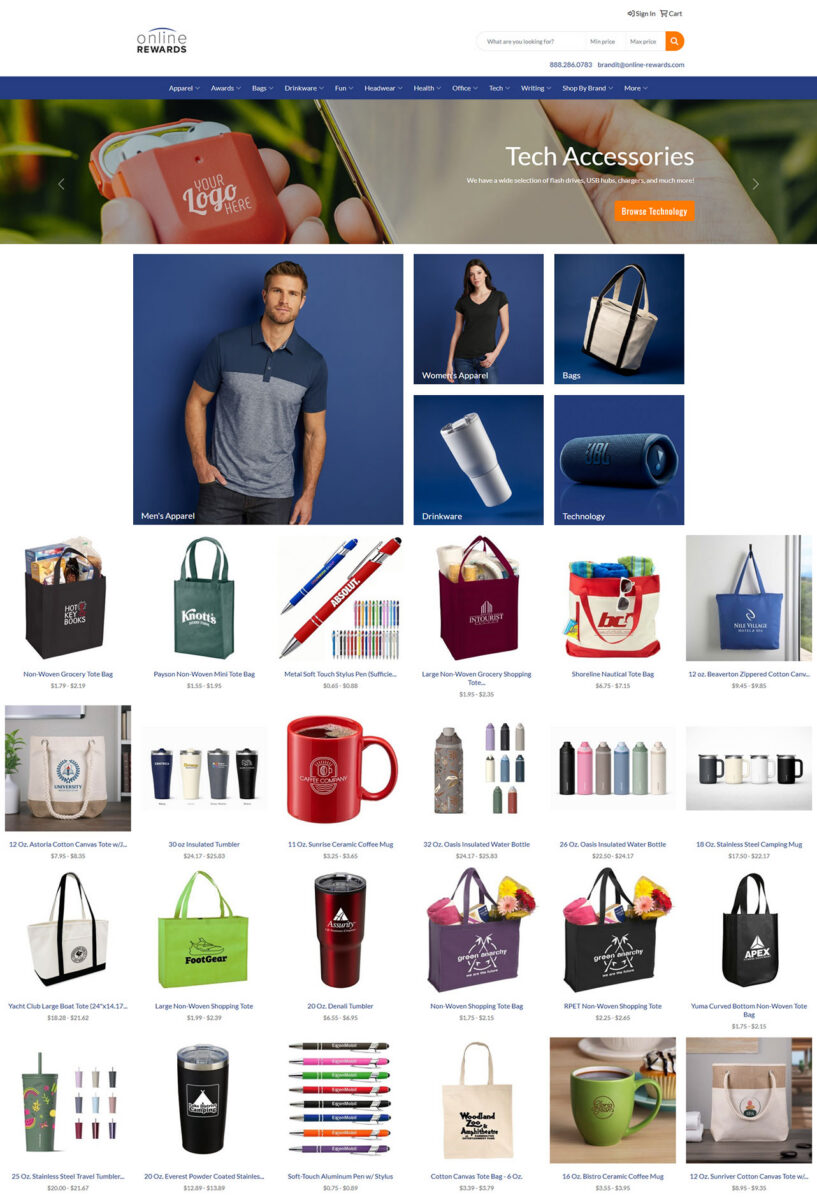
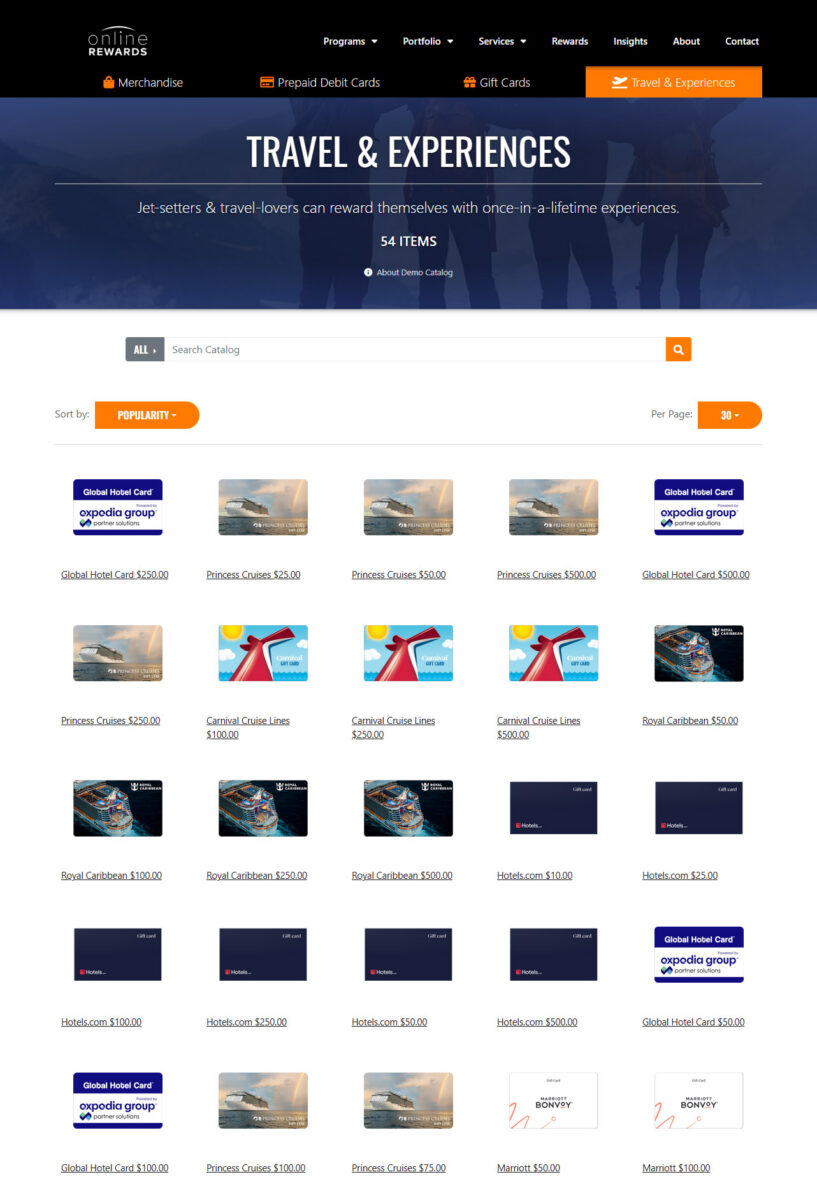
Reward relevance also extends beyond monetary value. Experiences, recognition, exclusivity, and convenience can often create stronger engagement than purely financial incentives, depending on the audience and context.
As incentive programs grow, manual management becomes increasingly difficult.
Many organizations still rely on spreadsheets, email approvals, disconnected reward vendors, and manual fulfillment processes. While this may work for smaller programs, it quickly becomes inefficient at enterprise scale.
Automation solves many of these problems.
This significantly reduces operational complexity while improving consistency and scalability.
This enables real-time incentives that respond immediately to user behavior.
By embedding incentives directly into workflows, organizations create more responsive and engaging experiences.
Platforms such as Online Rewards help businesses automate incentive delivery globally while centralizing reporting and fulfillment into one system.

An incentive program should never be measured only by participation or reward redemption. The real goal is behavioral change and business impact.
To understand whether a program is effective, organizations need clear visibility into performance metrics.
The right metrics depend on the original behavioral objective.
Tracking performance over time also allows businesses to optimize programs continuously.
Without centralized reporting and visibility, this optimization process becomes extremely difficult.
Modern incentive platforms provide real-time insights across all programs, allowing businesses to understand what is working and where improvements are needed.
Different audiences respond to incentives in different ways. Effective program design requires understanding what motivates each group and how incentives fit into their existing behaviors.
Employee programs are typically focused on:
These programs often perform best when recognition and visibility are combined with rewards.
Examples include:
Employee programs should feel supportive rather than purely transactional.
Customer programs focus on:
Simplicity is especially important in customer-facing programs. Users should immediately understand:
Complicated mechanics often reduce participation.
Partner programs are designed around:
These programs often involve more layered structures, including tiers, performance incentives, and partner recognition systems.
Because channel ecosystems are frequently global, scalability and localized rewards become particularly important.
A centralized platform helps businesses manage all of these use cases consistently while maintaining flexibility for each audience.

As incentive programs become more important to growth and engagement strategies, organizations are moving away from fragmented systems and toward centralized platforms.
This shift is being driven by several factors.
First, businesses want greater operational efficiency. Managing multiple vendors and disconnected systems creates unnecessary complexity and administrative burden.
Second, organizations need better visibility into performance. Centralized platforms provide reporting, analytics, and real-time insights that are difficult to achieve through manual systems.
Third, global scalability has become increasingly important. Businesses need infrastructure that supports multiple regions, currencies, and localized rewards without requiring separate systems in every market.
Consistency is another major factor. Centralized platforms create more uniform user experiences across employees, customers, and partners.
Finally, automation enables businesses to respond to behavior in real time, improving engagement and reducing operational delays.
This allows organizations to move from isolated reward programs toward scalable behavior-driven engagement systems.
Successful incentive programs are built around clear behavioral goals, simple structures, timely rewards, and measurable outcomes.
Start by identifying the exact behavior you want to influence, then align rewards, timing, communication, and measurement around that objective.
Most programs fail because they are too complex, poorly communicated, difficult to measure, or focused on rewards instead of behavior.
The best rewards depend on the audience and objective. Flexible reward choice and localized options tend to improve engagement.
ROI is measured through participation, engagement, behavioral change, performance improvement, retention, and revenue impact.
Rewards are the items or experiences being offered. Incentives are the broader systems designed to influence behavior through rewards.
Effective incentive program design is not about giving away rewards. It is about influencing behavior in a structured, measurable, and scalable way.
The most successful programs start with a clear understanding of the behavior being targeted and build every part of the experience around reinforcing that action.
As businesses scale, manual incentive management becomes increasingly difficult. Centralized platforms allow organizations to automate incentives, improve consistency, and create stronger engagement across employees, customers, and partners.
Platforms such as Online Rewards help businesses design and manage behavior-driven incentive programs through a single scalable system.
For organizations looking to improve engagement, performance, and long-term participation, incentive program design is no longer just a tactical activity. It is becoming a core part of modern growth and engagement strategy.