
Businesses are increasingly looking for ways to build engagement directly into their products rather than relying on separate systems and disconnected experiences.
Whether the goal is increasing customer loyalty, motivating users, rewarding referrals, or driving employee engagement, incentives are often most effective when they are delivered within the experiences users already engage with every day.
This is where rewards APIs have become increasingly important.
Rather than sending users to external rewards portals or managing incentives manually, rewards APIs allow businesses to embed rewards directly into their own products, platforms, applications, and workflows.
This creates a more seamless experience for users while giving organizations greater flexibility, automation, and control over how incentives are delivered.
As incentive programs become more sophisticated, rewards APIs are becoming a critical part of modern engagement infrastructure.
A rewards API is a set of programmatic connections that allows software applications to access rewards functionality from an external platform.
Instead of building reward infrastructure from scratch, businesses can connect to an existing rewards platform and integrate capabilities directly into their own products.
The API acts as the bridge between the organization’s application and the rewards platform.
This allows reward experiences to become embedded within existing user journeys rather than operating as standalone systems.
Platforms such as Online Rewards provide API-driven infrastructure that enables businesses to integrate rewards directly into their products while leveraging global fulfillment and rewards delivery capabilities.
Historically, rewards programs often operated separately from the products they supported.
Users might receive an email, visit a separate rewards portal, or interact with an entirely different system to access incentives.
This creates friction.
Every additional step reduces engagement and increases the likelihood that users will abandon the process.
Embedding rewards directly into products removes this friction.
This creates a more natural experience that feels integrated rather than bolted on.
It also allows businesses to align incentives more closely with product usage and customer behavior.
The reward becomes part of the product experience rather than an external marketing initiative.

Rewards APIs support a wide variety of engagement strategies across different industries and business models.
One of the most common use cases is customer loyalty.
Businesses can automatically issue points, credits, or rewards based on customer activity without requiring manual intervention.
Another popular application is referral programs.
When users successfully refer new customers, rewards can be triggered instantly through API integrations.
Product adoption is another growing use case.
Employee engagement programs can also benefit from API integration.
Channel and partner programs are another area where APIs create significant value.
Because the rewards are delivered through automated workflows, organizations can scale engagement programs without increasing administrative overhead.
While implementations vary between providers, most rewards API integrations involve several core components.
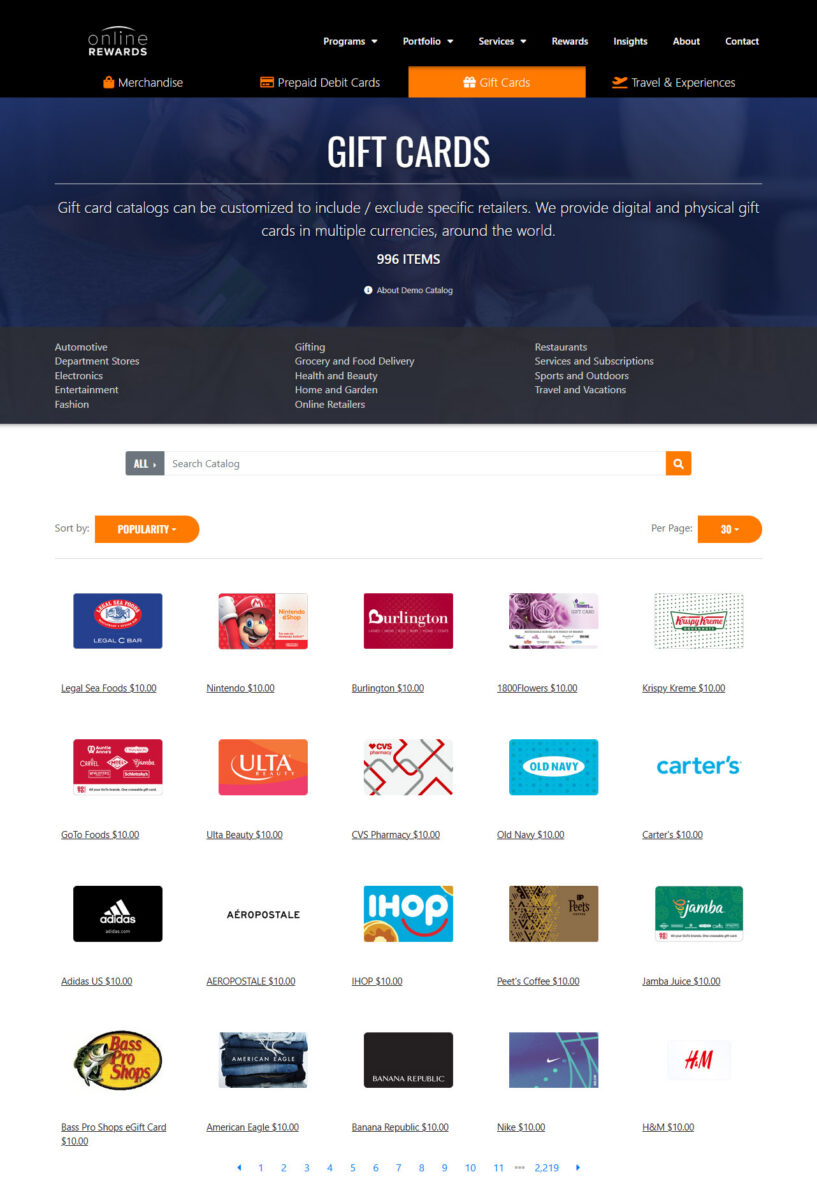
The first component is access to the rewards catalog.
This allows applications to display available incentives directly within the user experience.
Users can browse:
without leaving the platform.
Most integrations require user identification and account management capabilities.
This allows the rewards platform to associate activity, points, and redemptions with specific users.
The integration typically handles:
Reward issuance allows businesses to allocate incentives automatically based on predefined triggers.
For example:
The API manages the allocation process while the business controls the logic that determines when rewards are earned.

One of the most valuable aspects of API-based rewards infrastructure is automation.
Rather than manually reviewing activity and issuing rewards, businesses can create trigger-based workflows that respond automatically to user behavior.
This creates immediate reinforcement, which strengthens engagement and improves user experience.
Automation also reduces operational workload by eliminating many of the manual processes traditionally associated with rewards management.
One of the biggest challenges businesses face when launching rewards programs is fulfillment.
Providing rewards to users in a single country may be relatively straightforward. Supporting multiple countries, currencies, languages, and reward preferences introduces significantly more complexity.
A rewards API helps solve this problem by providing access to a centralized global rewards catalog.
through a single integration.
The rewards platform manages sourcing, fulfillment, and delivery behind the scenes.
This allows businesses to offer localized rewards while maintaining centralized control and reporting.
For global organizations, this approach significantly reduces operational complexity while improving consistency across regions.
Organizations evaluating rewards functionality often face a common decision.
Should they build their own rewards infrastructure or integrate an existing platform through APIs?
At first glance, building internally may appear attractive. It offers complete control over the user experience and removes dependency on third-party vendors.
However, building rewards infrastructure is often more complex than expected.
Maintaining this infrastructure over time can become expensive and resource-intensive.
Rewards APIs allow businesses to focus on building their core product while leveraging specialized rewards infrastructure that already exists.
For many businesses, API integration provides a faster and more scalable path to launching rewards functionality.

As rewards become embedded into products and workflows, security becomes increasingly important.
Scalability is equally important.
Programs that initially support hundreds of users may eventually need to support tens of thousands or even millions of participants.
A well-designed API infrastructure should allow businesses to scale reward delivery without needing to redesign their systems.
Scalable infrastructure enables organizations to grow engagement programs without increasing operational complexity.
Effective rewards programs require more than reward delivery.
Businesses also need visibility into performance.
This data can be integrated directly into business intelligence systems and reporting dashboards.
Centralized analytics help businesses optimize incentive strategies and improve performance over time.
Without this visibility, it becomes difficult to understand whether rewards programs are actually influencing behavior effectively.
One of the biggest advantages of API-based rewards infrastructure is its ability to connect directly with existing technology stacks.
Rather than operating as isolated systems, rewards can become embedded within operational workflows.
Common integrations include:
Rewards can be triggered based on:
This allows businesses to automate incentive programs directly within sales and customer success workflows.
Employee rewards can be connected to:
This creates a more seamless employee experience while reducing administrative work.
Training completion and certification programs can automatically issue incentives when users achieve predefined milestones.
This is particularly useful for employee enablement and channel partner education initiatives.
Many organizations use API integrations to connect rewards directly to product behavior.
Examples include:
This allows incentives to reinforce behaviors that drive product growth and customer retention.

Enterprise organizations increasingly view rewards as part of their broader engagement infrastructure rather than standalone programs.
Businesses need systems that can scale consistently and integrate into existing workflows.
Instead of managing multiple disconnected systems, organizations can create a unified engagement ecosystem powered by a single rewards infrastructure layer.
Platforms such as Online Rewards help businesses embed rewards directly into their products while supporting global fulfillment, automation, and engagement management at scale.
A rewards API allows businesses to integrate rewards functionality directly into their applications, products, or platforms through programmatic connections.
Rewards APIs can provide access to reward catalogs, automate reward delivery, manage points systems, support redemptions, and provide reporting data.
Using a rewards API reduces development time, operational complexity, and maintenance requirements while providing access to existing rewards infrastructure.
Yes. Many rewards APIs provide access to global rewards catalogs, localized incentives, multiple currencies, and international fulfillment capabilities.
Rewards APIs commonly integrate with CRM platforms, HR systems, learning management systems, ecommerce platforms, marketing automation tools, and product usage data.
Rewards APIs allow businesses to embed incentives directly into their products, platforms, and workflows without building rewards infrastructure from scratch.
By connecting applications to global rewards catalogs, automated fulfillment systems, and centralized reporting, organizations can create seamless engagement experiences that reinforce valuable behaviors.
API-driven rewards platforms provide the flexibility and efficiency required to meet these demands.
Platforms such as Online Rewards enable organizations to integrate rewards directly into their products while leveraging enterprise-grade engagement infrastructure behind the scenes.
For businesses looking to build loyalty, improve engagement, and automate incentives at scale, rewards API integration is becoming a critical part of modern product strategy.