
The success of an incentive program is rarely determined by the rewards alone.
Many organizations focus heavily on selecting incentives while overlooking the underlying structure that governs how the program operates. As a result, they often create programs that work initially but become difficult to manage as participation grows.
This is where incentive program architecture becomes critical.
Incentive program architecture is the framework that defines how a program functions, scales, measures success, and integrates into broader business processes.
Without a strong foundation, even the most attractive rewards program can become difficult to sustain.
As incentive strategies expand across customers, employees, sales teams, and partners, businesses increasingly need architectures that support long-term growth rather than short-term campaigns.
Incentive program architecture refers to the structure, rules, workflows, and systems that determine how an incentive program operates.
Think of architecture as the blueprint behind the engagement strategy.
Participants may only see the rewards and user experience, but behind the scenes, there are often dozens of components working together.
The stronger the architecture, the easier it becomes to manage growth and maintain consistency across audiences and regions.
Many incentive programs are designed around immediate needs rather than long-term scalability.
using spreadsheets and manual processes.
Initially, these programs may work well.
What worked for 100 participants often struggles at 10,000 participants.
This is not usually a rewards problem.
It is an architecture problem.
Scalable programs require systems and workflows that can grow without dramatically increasing operational complexity.
Every scalable incentive architecture begins with clearly defined objectives.
Before selecting rewards or building workflows, organizations should identify the specific outcomes they want to achieve.
These objectives determine how the rest of the architecture should be designed.
One common mistake is designing programs around rewards rather than outcomes.
For example, asking:
“What rewards should we offer?”
before asking:
“What behavior are we trying to influence?”
The most effective architectures begin with behavioral objectives and then build incentive structures around them.
This creates stronger alignment between engagement activity and business goals.

Once objectives are established, the next step is identifying the specific behaviors that support those goals.
The more clearly behaviors are defined, the easier it becomes to create effective incentive logic.
Scalable architectures rely on measurable actions rather than vague engagement goals.
This allows automation, reporting, and optimization to function effectively.
Reward logic determines how participants earn incentives.
This is one of the most important parts of program architecture because it directly influences user behavior.
Users earn points for completing actions and redeem them through a rewards catalog.
This model works well for:
Participants earn rewards after reaching predefined achievements.
Examples include:
Users move through different levels based on engagement or performance.
Higher tiers unlock additional benefits and incentives.
Recognition serves as the primary reward mechanism, often supported by points or incentives.
These structures are commonly used in employee engagement programs.
The best architecture aligns reward logic closely with desired behaviors while keeping the experience easy for participants to understand.
One of the most common reasons incentive programs fail is excessive complexity.
This creates friction.
Simple programs consistently outperform complicated ones.
Complexity increases administration while often reducing engagement.
A scalable architecture prioritizes clarity and consistency over unnecessary sophistication.
Modern incentive programs increasingly support multiple audiences simultaneously.
Rather than building separate systems for every audience, scalable architectures often centralize engagement infrastructure while allowing different program configurations.
This creates operational efficiencies and improves consistency.
Platforms such as Online Rewards help organizations manage multiple incentive programs through centralized infrastructure while maintaining flexibility for different audiences.

Manual administration is one of the biggest barriers to scalability.
Programs that rely heavily on spreadsheets, email approvals, and manual reward allocation often become difficult to manage as participation increases.
A scalable incentive architecture should automate as many processes as possible.
Automation reduces operational burden while improving consistency and accuracy.
Automation strengthens engagement because rewards are delivered closer to the desired behavior.
It also allows organizations to support larger programs without proportionally increasing administrative resources.
Scalable incentive programs should not operate as isolated systems.
Instead, they should connect directly to the platforms and workflows participants already use.
Sales and customer engagement incentives often rely on CRM data.
Examples include:
CRM integration allows incentives to be triggered automatically based on verified business activity.
Employee engagement programs often connect to:
This creates a more seamless employee experience while reducing manual administration.
Many organizations increasingly tie incentives directly to product behavior.
Examples include:
This allows businesses to reinforce behaviors that support retention and growth.
Partner programs frequently integrate with:
These integrations help automate rewards and improve visibility into partner performance.
The stronger the integration layer, the easier it becomes to scale incentive programs without creating operational bottlenecks.
The rewards layer is another critical component of incentive architecture.
Many programs struggle because reward options become difficult to manage as participation expands.
Organizations often face challenges around:
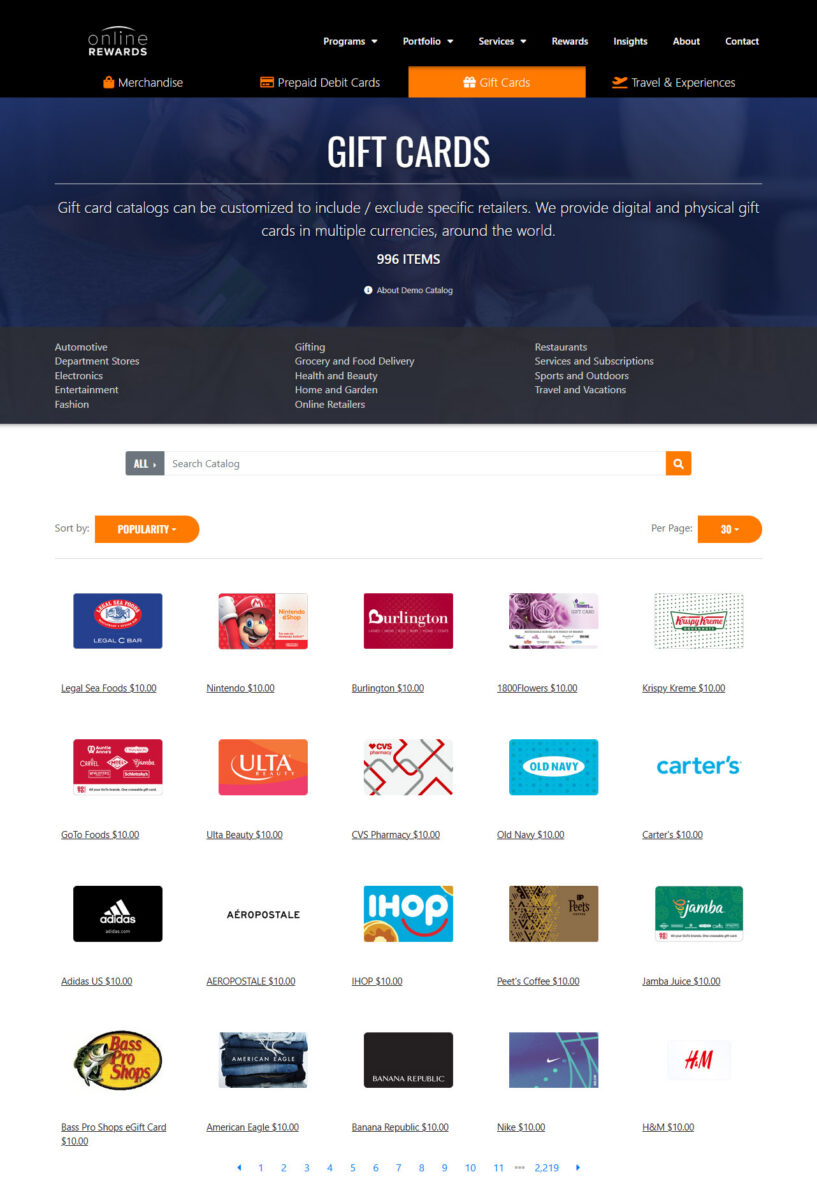
A scalable architecture typically relies on centralized rewards infrastructure rather than manually sourcing and managing incentives.
through a single system.
Flexibility is especially important for organizations operating internationally, where reward preferences vary significantly between regions.
A centralized rewards catalog allows businesses to maintain consistency while supporting local relevance.

Many incentive programs launch without a clear reporting framework.
Scalable architectures incorporate reporting from the outset.
Centralized reporting allows organizations to continuously optimize program performance.
Without visibility, it becomes difficult to identify opportunities for improvement or justify future investment.
Global expansion introduces additional architectural considerations.
Programs that work effectively in one market may encounter challenges internationally.
A scalable architecture should account for these requirements before expansion occurs.
Rather than building separate systems for each region, organizations increasingly adopt centralized infrastructure that supports global participation from the start.
Platforms such as Online Rewards provide a global rewards infrastructure designed to support multi-country engagement programs through one centralized system.
As engagement strategies become more important to business performance, organizations are shifting their focus from individual programs to long-term infrastructure.
This reflects a broader realization that incentives are no longer isolated campaigns.
A strong architectural foundation allows businesses to launch new programs faster while maintaining consistency and operational efficiency.
Incentive program architecture is the framework that defines how an incentive program operates, including its rules, workflows, rewards, integrations, and reporting systems.
Strong architecture allows incentive programs to scale efficiently while maintaining consistency, visibility, and operational control.
Scalable programs typically include automation, centralized rewards infrastructure, integrations, reporting, and flexible engagement models.
Modern incentive platforms often connect with CRM systems, HR platforms, learning management systems, product data, and partner systems through integrations and APIs.
Automation reduces manual administration, improves reward delivery speed, strengthens behavioral reinforcement, and supports larger participation volumes.
Successful incentive programs are built on more than rewards.
They rely on strong architecture that supports engagement, automation, measurement, and long-term scalability.
As incentive programs become increasingly important across customers, employees, sales teams, and partners, architecture is becoming a strategic advantage rather than simply an operational consideration.
Platforms such as Online Rewards help organizations build scalable incentive ecosystems through centralized rewards infrastructure, automation, reporting, and global engagement capabilities.
The most successful programs are not just well-designed. They are built on architectures that can grow alongside the business.