
A rewards catalog is a curated collection of incentives that users can browse and redeem as part of a rewards, loyalty, incentive, or recognition program.
Rather than receiving a fixed incentive chosen by the organization, users can select rewards that are most relevant to their preferences.
This flexibility helps improve engagement because different people are motivated by different types of rewards.
For many organizations, the rewards catalog is one of the most visible parts of the overall engagement experience.
The purpose of a rewards catalog is to provide users with meaningful choices when redeeming points, rewards, or incentives.
This approach can reduce engagement because not all rewards have equal value to every participant.
A rewards catalog solves this by allowing users to choose rewards that are personally relevant to them.
Providing choice increases perceived value and often improves participation rates within the program.

Most rewards catalogs follow a straightforward process.
First, users earn points, credits, rewards, or recognition through participation in a program.
As rewards accumulate, users gain access to the catalog.
The catalog displays available reward options along with the points or credits required for redemption.
Users can browse available incentives, select a reward, and complete the redemption process directly within the platform.
The rewards provider then handles fulfillment and delivery.
Modern rewards platforms automate this entire process to create a seamless user experience.
The contents of a rewards catalog vary depending on the provider, audience, and geographic coverage.
Most modern catalogs include several categories of incentives.
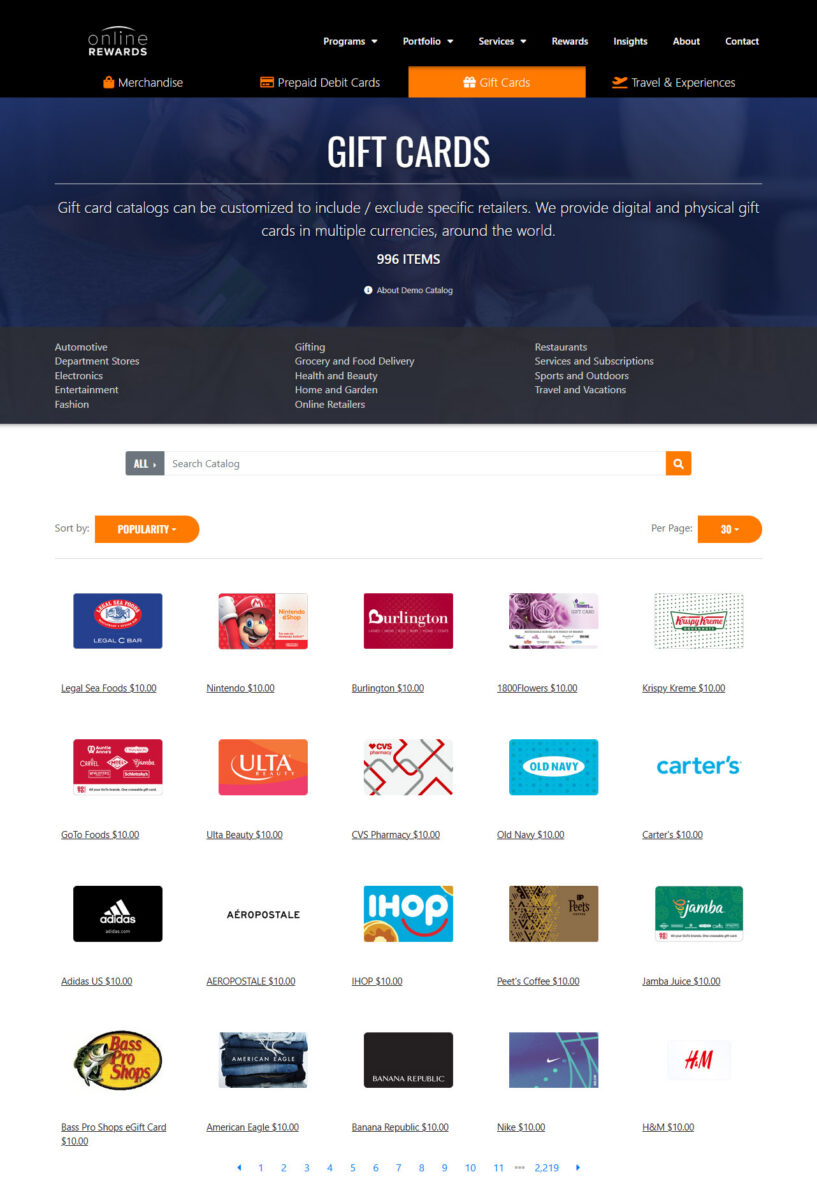
Gift cards are among the most popular rewards because they offer flexibility and broad appeal.
Examples may include:
Gift cards often work well because users can choose products and services that matter to them.
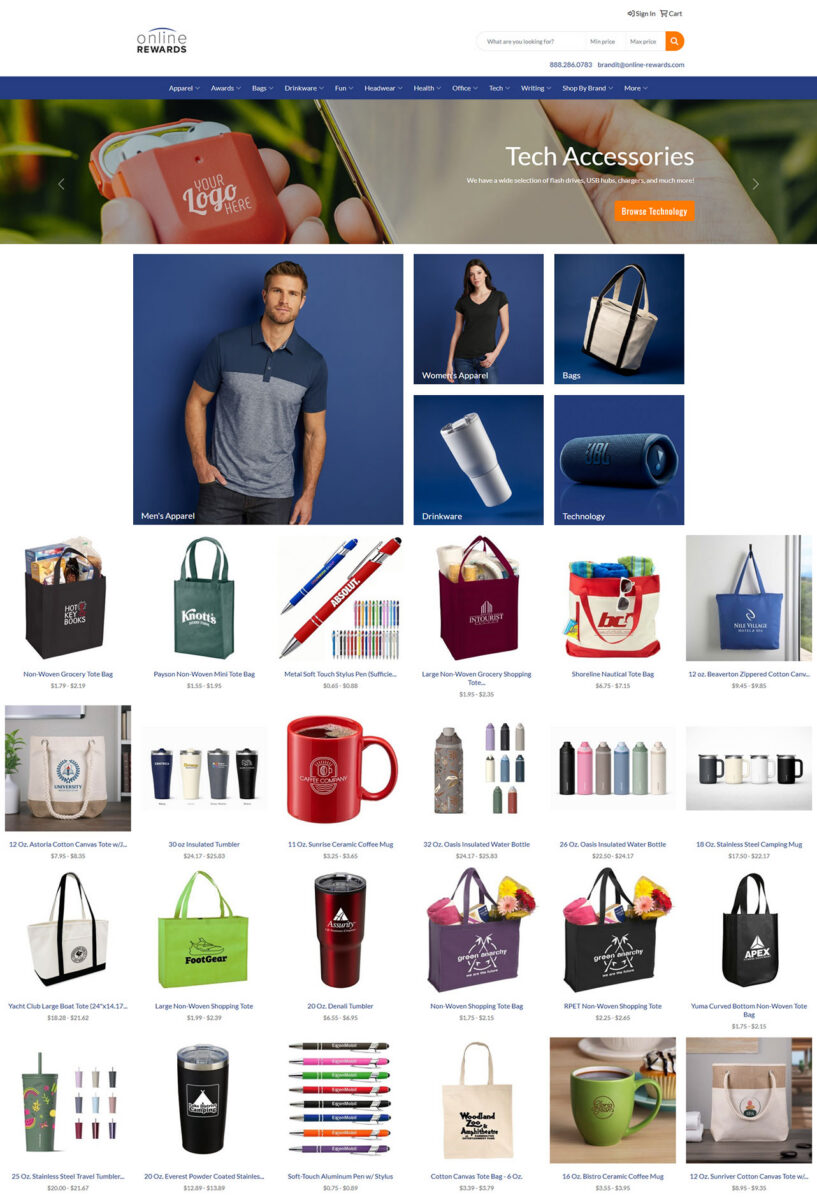
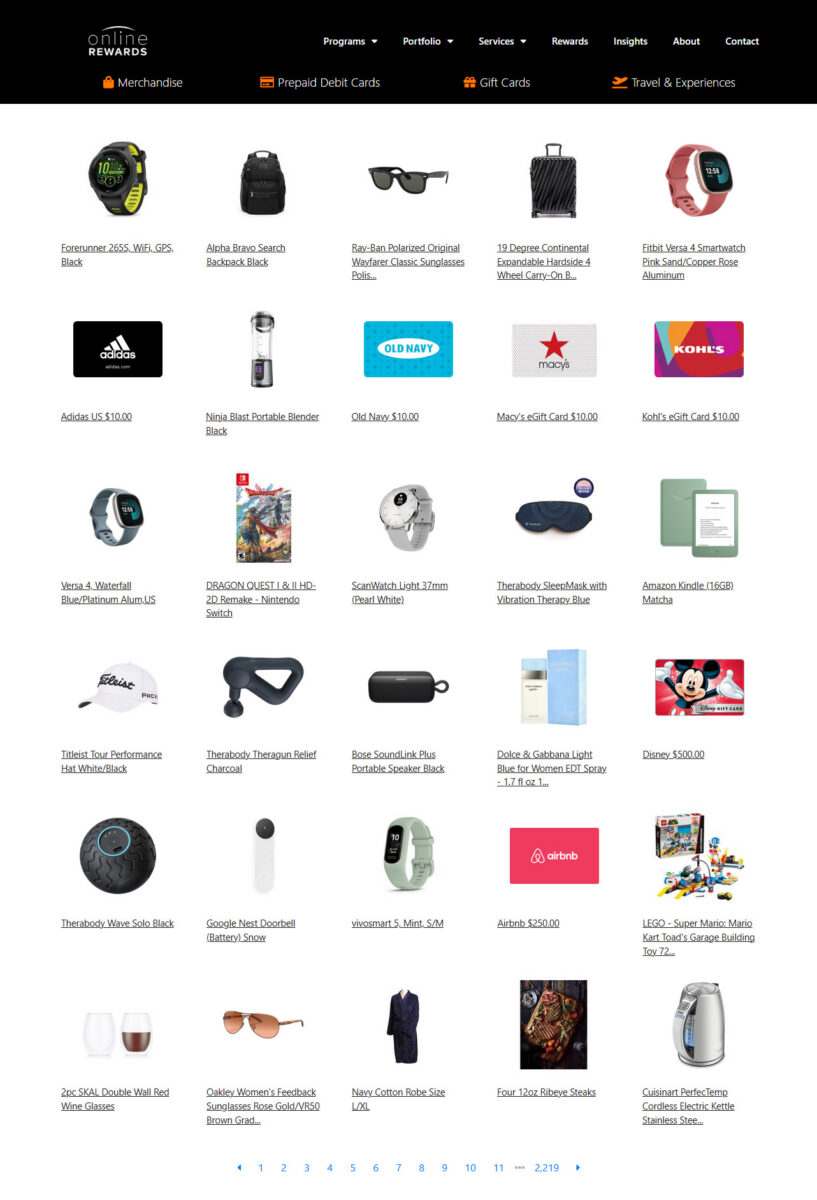
Many rewards catalogs include physical products across multiple categories.
Examples may include:
Merchandise rewards provide tangible incentives that can feel more memorable than cash equivalents.
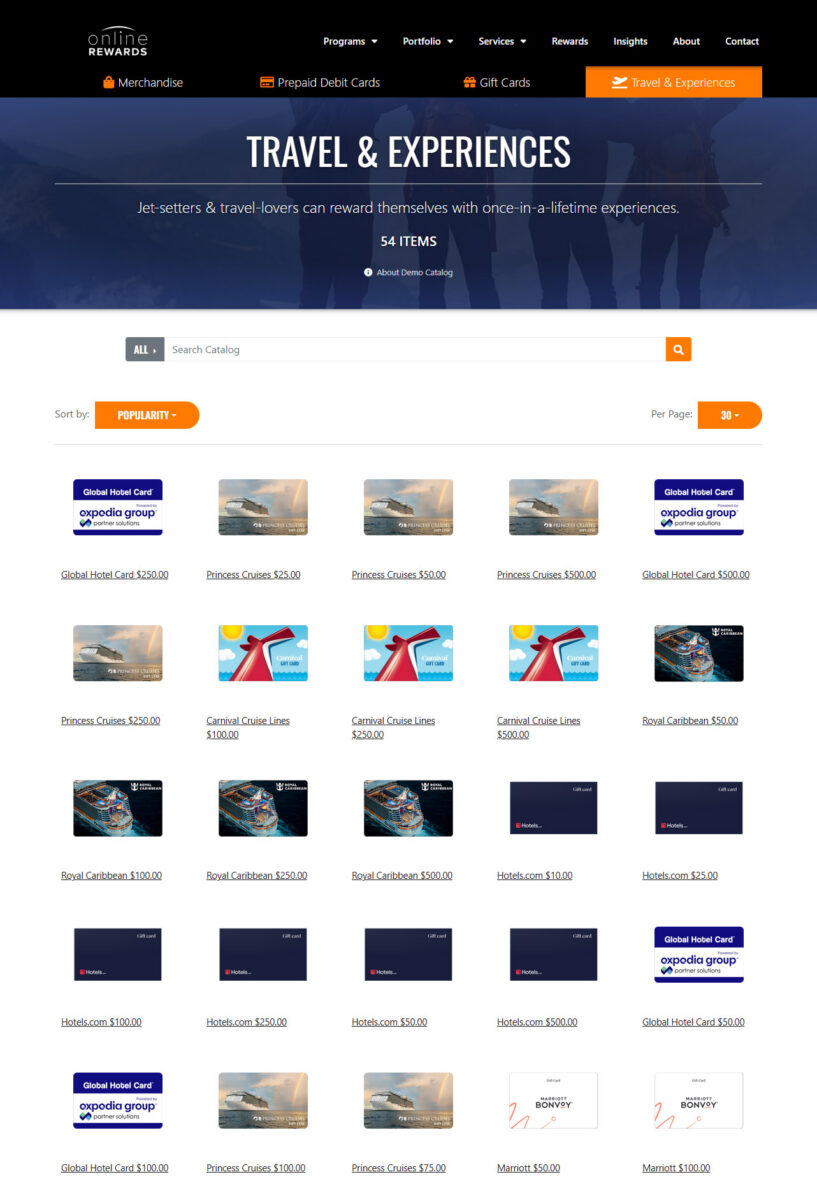
Experiential rewards have become increasingly popular in modern engagement programs.
Examples may include:
Experiences often create strong emotional connections and can be highly motivating for certain audiences.
Digital rewards offer fast delivery and simple fulfillment.
Examples include:
These rewards are particularly effective in global programs because delivery can happen almost instantly.
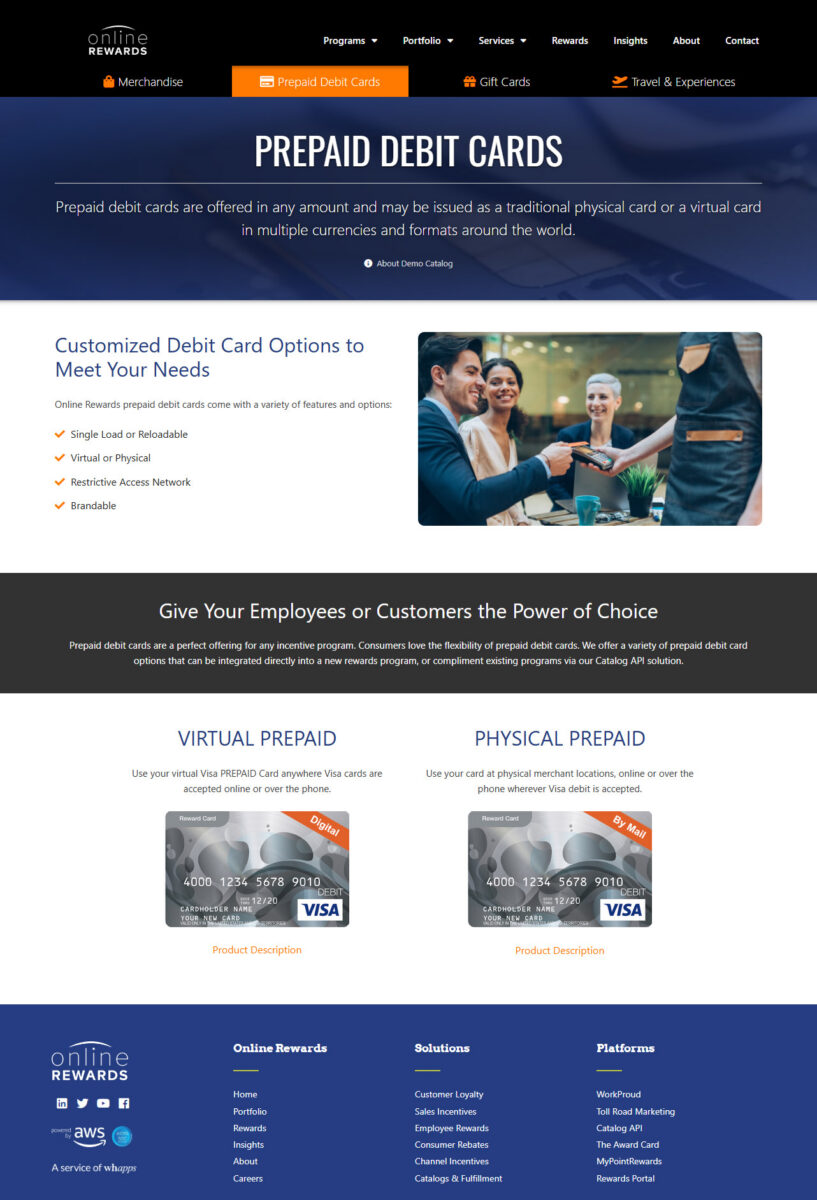
Prepaid reward cards provide flexibility while maintaining a branded rewards experience.
Participants can often use these cards across multiple merchants and categories, making them appealing to a broad range of users.

A rewards catalog does much more than provide a list of incentives.
It plays a major role in determining how engaging and effective a rewards program will be.
One of the biggest advantages is personalization.
Different users value different rewards. A single reward option may motivate some participants while having little impact on others.
By offering choice, rewards catalogs allow organizations to appeal to a wider audience without needing to manage separate incentive programs.
The ability to select rewards creates a stronger sense of ownership and control, which often leads to higher perceived value.
In many cases, users place greater value on rewards they personally selected than on rewards assigned to them automatically.
As organizations expand internationally, reward catalogs become significantly more important.
A reward that performs well in one country may not be relevant in another.
Global rewards catalogs address these challenges by providing localized reward options within a centralized system.
Rather than maintaining separate catalogs for every country, organizations can provide regionally relevant incentives through a single platform.
Platforms such as Online Rewards provide global rewards catalogs that support multiple countries, currencies, and reward types through one centralized infrastructure.
A rewards catalog and a reward vendor are not necessarily the same thing.
A reward vendor typically supplies specific incentives.
A rewards catalog acts as the user-facing marketplace that brings multiple reward suppliers together into one experience.
Rather than managing separate vendor relationships individually, organizations can provide users with access to a wide range of rewards through a single catalog.
For enterprise organizations, a centralized catalog infrastructure is often significantly easier to manage than coordinating multiple suppliers independently.

The effectiveness of a rewards program often depends on whether participants find the incentives valuable.
Rewards catalogs improve engagement because they increase reward relevance.
When users have access to rewards they genuinely want, participation tends to increase.
Catalogs also support different motivational styles.
Providing variety allows programs to appeal to a broader range of participants.
Over time, this flexibility helps maintain engagement and reduces the risk of incentive fatigue.
Historically, rewards catalogs often required significant manual administration.
Modern rewards platforms automate much of this process.
This allows organizations to offer sophisticated rewards experiences without building infrastructure internally.
Automation also improves scalability, making it easier to support larger audiences and global programs.
Not all reward catalogs are created equally.
When evaluating a rewards platform, organizations should consider factors such as:
The catalog should offer a broad range of incentives that appeal to different audiences.
International organizations should ensure rewards are available across multiple countries and currencies.
The platform should support reliable and efficient reward delivery.
The redemption process should be simple, intuitive, and easy to navigate.
Modern catalogs should integrate with CRM, HR, loyalty, and engagement platforms.
Organizations should have visibility into:
These capabilities help maximize the effectiveness of rewards programs over time.
A rewards catalog is a collection of incentives that users can browse and redeem through a rewards, loyalty, incentive, or recognition program.
Rewards catalogs commonly include gift cards, merchandise, experiences, travel rewards, prepaid cards, and digital incentives.
Users typically access a rewards catalog after earning points, credits, rewards, or recognition through participation in a program.
Rewards catalogs improve engagement by giving users a choice and allowing them to select rewards that are personally relevant.
Yes. Modern rewards catalogs often provide localized incentives, multiple currencies, and international fulfillment capabilities.
A rewards catalog is one of the most important components of a successful rewards or incentive program.
By providing users with access to a curated selection of rewards, catalogs help increase engagement, improve satisfaction, and create more meaningful redemption experiences.
Modern rewards catalogs go far beyond simple gift card marketplaces.
As organizations scale their engagement efforts, centralized rewards catalogs help simplify administration while delivering more relevant and personalized incentives.
Platforms such as Online Rewards provide a global rewards catalog infrastructure that enables businesses to offer localized rewards, automate fulfillment, and support engagement programs across multiple audiences and regions.
For organizations looking to improve participation and long-term engagement, a well-designed rewards catalog is often one of the most valuable components of the overall program experience.